
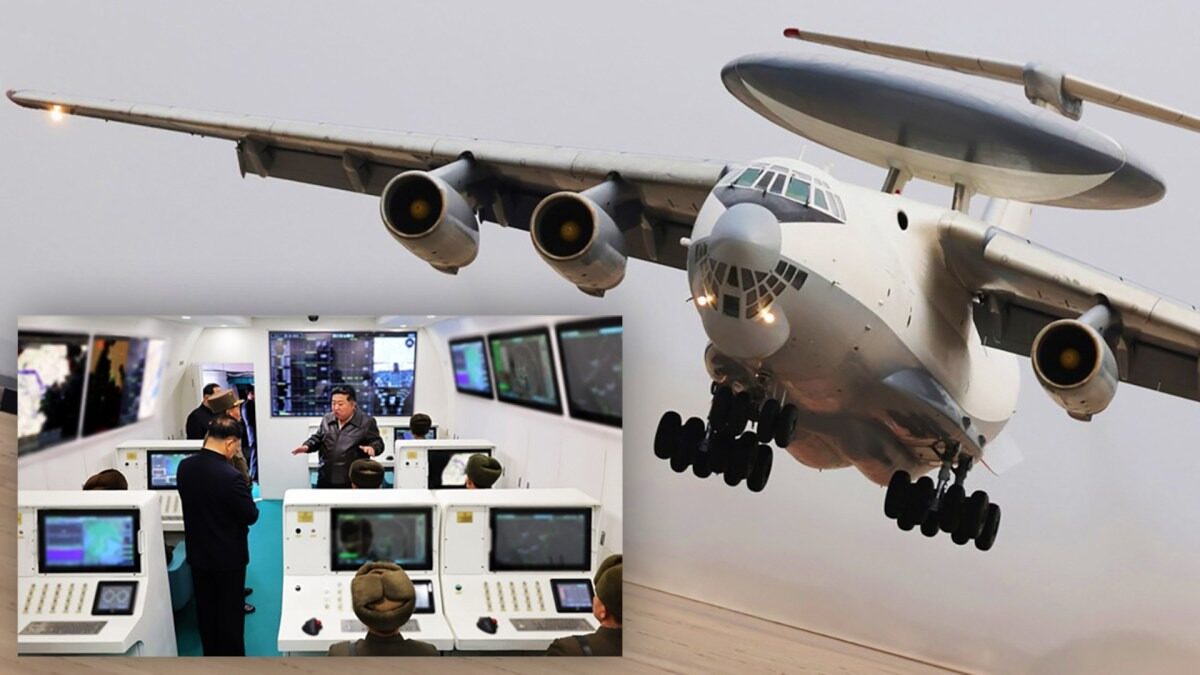
The first climb into gray winter air was brief, but it carried weight and intent. In a few careful passes, a new surveillance craft etched thin lines of contrail and meaning above a region already primed for signals. The flight was short, the message long, and the implications immediate.
Observers watched from a safe distance, reading body language in wing sweep and engine tone. “You don’t need fireworks when the airframe speaks for itself,” murmured one analyst, eyes fixed on the climb. In that ascent, the craft marked a threshold no one could easily uncross.
A message beyond the runway
Every rollout is part theater and part threshold. This debut worked as deterrent and demonstration wrapped in a spare, clinical profile. The audience was both domestic and external: engineers seeking validation, commanders seeking reach, and neighbors measuring risk with rulers of their own.
The aircraft’s silhouette suggested patience rather than speed—long wings, clean lines, sensor fairings where drag is data. “It tells rivals, ‘We will see you sooner, and decide faster,’” said a regional security researcher. That compression of time is the real headline.
What sets it apart
What makes this platform feel unfamiliar is not a single trick, but the way multiple disciplines converge into one stubbornly persistent watcher. Analysts point to a fit that looks optimized for high-altitude loiter, multi-sensor fusion, and resilient links that stretch beyond familiar borders.
- A likely blend of SAR and GMTI to map terrain and track motion through clouds, night, and distance.
- Wideband collection suites to eavesdrop on emitters, paint patterns, and cue other assets in real time.
- Long-span aerodynamics for altitude efficiency and fuel economy, tuning hours into persistence rather than heroics.
- Hardened comms that hint at satellite relays, prioritizing survivability and command continuity under stress.
None of this is fully confirmed, and that uncertainty is intentional. The ambiguity becomes a capability of its own, forcing planners to assume more rather than less.
The strategy in the sensors
Surveillance aircraft don’t win battles; they bend the timeline around them. With broader eyes, commanders can shrink the loop from detection to decision, shifting from reactive defense to anticipatory positioning. Maritime patrols get sharper. Border monitoring grows thicker. Missile launch cues arrive earlier, with targeting data that lingers, updates, and persists.
“This isn’t about a single sortie,” noted a former pilot now working in technical advisory. “It’s about better questions, asked quicker, with answers that hold still long enough to act.” When the map gets fresher, the risks of misread signals can paradoxically fall, even as tension can also rise.
How neighbors will read it
Regional planners will treat the flight as both signal and stimulus. Expect quiet calibration before public statements: new orbits for satellites, altered routes for patrols, and thicker umbrellas of airborne warning. Procurement dials may click toward counter-ISR tools—low-power emissions, deceptive decoys, and hardened networks that tolerate scrutiny.
Allies will likely emphasize interoperability, compressing their own loops with shared feeds and combined exercises. Rivals will probe for seams, testing new playbooks against a more patient eye in the sky.
Risk, restraint, and the gray zone
A persistent watcher can cool impulsive gestures by making surprise expensive. It can also heat friction around contested lines, where a closer look feels like a closer step. The aircraft, by design, lives in that gray—not a weapon, yet not harmless; not overtly offensive, yet deeply enabling.
Escalation will depend on habits: rule-of-the-air etiquette, hotline discipline, and deliberate silences where both sides choose less drama, more procedure. If those habits hold, the new capability becomes a visor, not a spark.
What we still don’t know
Key questions remain, and they matter. How mature are the links that give sensors their real teeth? Can the platform survive contested electromagnetics, where jamming turns certainty into fog? Is the production line ready to turn one prototype into a credible fleet?
Images answer shapes, not schedules. Telemetry whispers ranges, not reliability. “You can fake a first flight,” said a satellite-imagery specialist, “but you can’t fake tempo.” Sustained sorties, seasonal testing, and joint exercises will tell the truth better than any debut tape.
For now, the sky has a new habit, and habits change maps. The runway is quiet again, but the orbit it enabled is loud in every planner’s head. Somewhere beyond the coast, above a lattice of shipping lanes and signals, a patient machine is counting seconds—and turning them into leverage.
